Community
Invasive Species
Invasive species are a serious threat to our environment, economy, and even personal safety. They can damage native ecosystems, spread rapidly, and are often difficult and costly to control once established. Some, like giant hogweed, can even cause physical harm.
Learn how to recognize, report, and safely remove invasive species using the resources below.
Before You Remove Invasive Species, Stop and Learn First!
Many invasive plants spread easily through transport or improper handling. Some are toxic or harmful to touch (e.g. giant hogweed). Before beginning removal, always research or contact a professional first.
Disposal Guidelines
Invasive Species are NOT accepted at the green waste facility:
The following are accepted at the Sechelt Landfill ONLY. Garbage tipping fees apply:
- Giant Hogweed
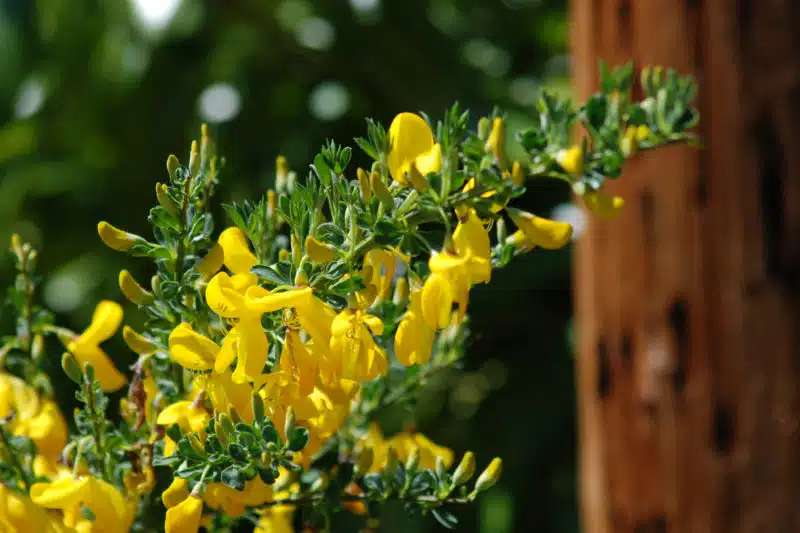
- Scotch Broom (must be secured in clear bags; no flowers and no seed pods)
For more details on disposal, contact the SCRD directly.
Helpful Information on Common Invasive Plants
All information and photos are from:

Knotweeds
Identification: Bamboo-like tall, straight and dense plant, 1-5 meters in height, stems hollow and green, flowers in plumes of small, white to green clusters, leaves heart-shaped, growing in a zig-zag pattern.
Threat: Grows aggressively and is very difficult to eradicate, often found in riparian areas and roadways. Can grow through asphalt and concrete, damaging infrastructure with high repair costs.
Control: Chemical control is recommended with a systemic herbicide, requiring treatment for 3-5 years. Do not cut or dig, as even small fragments can regrow.
Disposal: Best practice is to avoid off-site knotweed disposal due to the high risk of spread during transport. If best management practices are followed and chemical control methods are used, treated knotweed canes can be left on site to compost, and disposal is not necessary.
Giant Hogweed
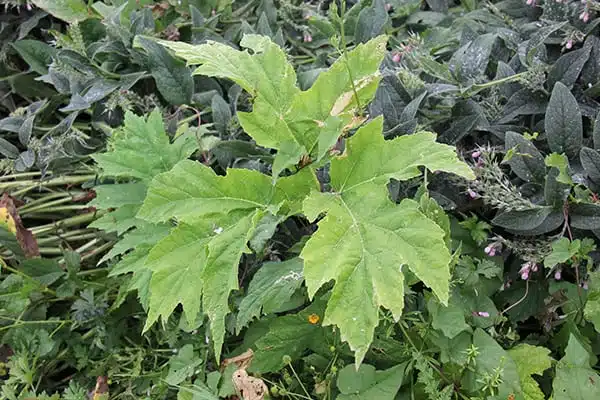
Identification: Large, jagged green leaves (up to 1.5 metres wide) with thick, purple-blotched stems with stiff white hairs. Umbrella-shaped white flower clusters (up to 1 metre wide).
Threat: Giant hogweed poses serious health risks. Its sap can cause severe skin burns and even blindness if it contacts skin and is exposed to sunlight.
Control: Mechanical control is most effective on small infestations of immature plants (1–2 years old). Digging can work at this stage, but is not recommended for mature plants, as their deep taproots (over 1 m) must be entirely removed to prevent regrowth. Cutting the top 8–12 cm of the central root annually may help. See factsheet for more information.
Disposal: Do not compost any plant material. Bag it securely in heavy-duty garbage bags and dispose of at the Sechelt landfill.